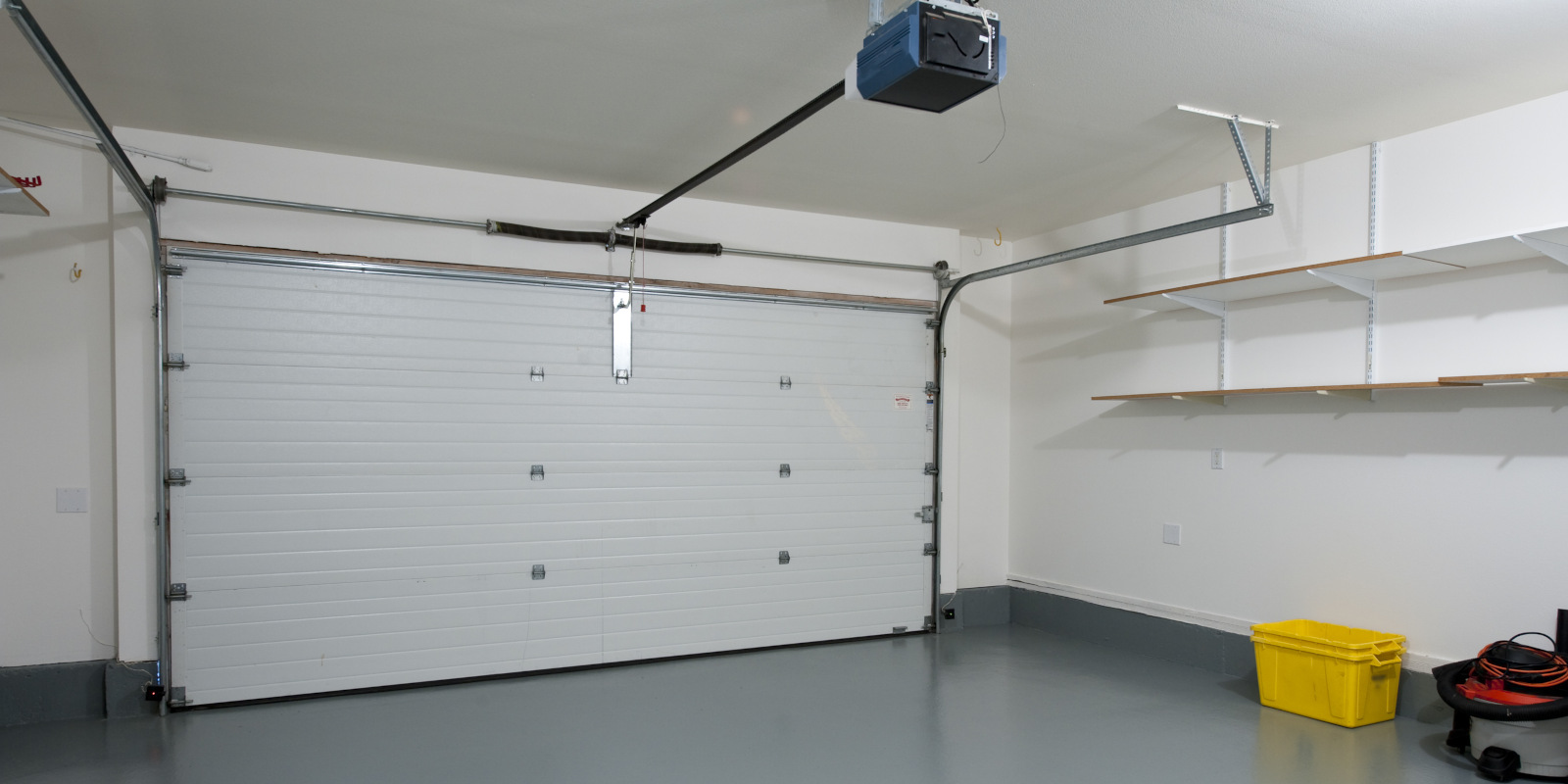
Mechanical doors are used across residential and commercial settings including warehouses, industrial facilities, commercial garages, agricultural buildings, self-storage facilities, fire stations, cold storage environments, and residential outbuildings. They operate through manual force, counterbalance springs, or basic mechanical linkages without depending on an electric motor, a control board, or sensors.
In environments where power is inconsistent, electronic components face dust or corrosive air, or daily traffic does not justify full automation, a properly installed mechanical door is often the most reliable long-term access solution available. Overhead Door Company of Charleston installs and services mechanical doors for residential and commercial properties throughout the Charleston area.
What Makes a Door Mechanical
A mechanical door is defined by what it does not require: no electric motor, no logic board, no photo eye sensors, and no dedicated power circuit. Operation relies on counterbalance springs calibrated to offset the dead weight of the door panel.
Most commercial mechanical overhead doors use torsion springs mounted on a steel shaft above the door opening. Spring systems are built to specifications governed by DASMA, the Door and Access Systems Manufacturers Association, whose technical data sheets define load ratings, cycle expectations, and hardware requirements for commercial grade installations. A properly balanced door lifts smoothly from a standing position with one hand. When significant effort is needed, the spring tension is off and the hardware absorbs load it was not designed to carry, accelerating wear on rollers, hinges, and cables. Spring calibration is professional-only work. The tension stored in a wound torsion spring represents enough stored energy to cause serious injury if adjusted without the correct tools and training.
Warehouses and Distribution Facilities
Mechanical doors appear throughout warehouse and distribution environments at secondary access points, utility entrances, and lower-traffic loading areas where daily cycle count does not justify an automated operator. In large distribution facilities, they frequently serve as backup access points alongside automated high-speed doors on primary bays.
When an automated operator fails mid-shift, the manual door at an adjacent bay keeps freight moving without a service call. Spring tension calibration matters in these applications because the door is handled by multiple employees across rotating shifts. A door easy to operate for one person and difficult for another is a door with a spring system that needs adjustment.
Industrial and Manufacturing Plants
Industrial environments place mechanical doors at utility entrances, equipment access corridors, and areas where traffic patterns do not align with high-cycle automated systems. Industrial settings produce dust, airborne particulate, vibration, and temperature extremes that accelerate wear on electronic components in ways that mechanical systems largely avoid.
In manufacturing plants with heavy airborne particulate, photo eye sensors, logic boards, and limit switches inside automated operators require frequent cleaning and recalibration. Contamination as thin as a film of dust on a sensor lens triggers false reversals or prevents the door from closing fully. A mechanical door with properly tensioned torsion springs, quality nylon rollers, and regularly lubricated hardware functions through these conditions without the same electronic vulnerability. Heavy-duty mechanical doors for industrial settings use reinforced steel panels and heavier gauge springs than standard residential models.
Commercial Garages and Auto Service Centers
Multi-bay auto service operations are one of the most common commercial settings for mechanical doors. Not every bay needs a powered operator. Lower-volume bays, parts storage access points, and secondary vehicle entrances are well-served by mechanical doors that reduce equipment cost without sacrificing function.
Technicians servicing mechanical doors in auto service environments consistently find hardware wears faster here than in most other commercial applications. Exposure to road grime, oil mist, and temperature swings accelerate corrosion on rollers, hinges, and spring hardware. Lubrication schedules effective in a standard commercial building may need to run twice as frequently in an active service bay. Heavy-duty bottom seals reduce debris pulled under the door during operation, protecting floor seals from repeated impact that lighter seals do not survive.
Agricultural and Farm Buildings
Agricultural properties depend on mechanical doors more heavily than almost any other sector. Barns, equipment sheds, grain storage structures, and livestock facilities often lack reliable electrical infrastructure, making mechanical doors the practical choice.
Hardware degrades in farming environments at a rate that surprises many property owners. Springs and hinges that perform without issue for ten or more years in a residential garage may need inspection within three to five years on a working farm. Sustained humidity, seasonal temperature swings, and exposure to fertilizers and agricultural chemicals accelerate corrosion on metal hardware noticeably faster than other settings. Galvanized hardware and corrosion-resistant coatings are not optional on farm doors. When a door fails during harvest season, the replacement timeline becomes an operational problem.
Storage Units and Self-Storage Facilities
Individual self-storage units are almost universally accessed through mechanical roll-up doors. These doors are operated by tenants rather than facility staff, run without a powered operator, and must function reliably without ongoing maintenance.
Storage unit mechanical doors differ from torsion spring systems used on larger commercial overhead doors in one technically important way. Rather than a torsion bar above the opening, storage unit roll-up doors use a coil spring system built into the door drum that stores tension as the door rolls up. This compact design suits the limited head room of individual storage unit openings, where a full torsion spring assembly would not fit. For operators managing hundreds of units, this low-maintenance mechanical design is a practical necessity.
Fire Stations and Emergency Facilities
Fire stations are among the highest-cycle door environments in any community, with apparatus bay doors cycling dozens of times per day. Mechanical doors serve primarily as backup systems and secondary access points, but their role as a reliable fallback makes maintenance requirements more demanding than frequency of use suggests.
Because backup doors may go weeks between uses, springs can lose calibration from temperature cycling. A door unused for three weeks and then needed urgently during a power outage must work on demand without hesitation. Spring systems should be inspected on a fixed schedule regardless of use frequency, with cycle ratings matched to projections that account for emergency surge demand.
Residential Garages and Outbuildings
For residential detached garages, workshops, and outbuildings, mechanical doors offer a straightforward alternative to automated systems where simple access is all the application requires. A homeowner using a detached workshop several times per week does not need a remote-controlled operator with Wi-Fi connectivity.
In coastal areas like Charleston, this calculation carries an additional dimension. Automated garage door openers face accelerated corrosion on circuit boards, sensor housings, and wiring connections from salt air exposure. A mechanical door with galvanized hardware and a quality torsion spring system is largely indifferent to salt air in ways that electronic components are not. For a detached garage where automation provides convenience rather than necessity, the long-term reliability argument for a mechanical door is a real one.
Cold Storage and Temperature-Controlled Environments
Cold storage facilities present specific challenges for automated door systems. Lubricants thicken at low temperatures. Sensors experience calibration drift. Circuit boards fail outside their rated operating range. Mechanical doors avoid most of these failure modes by eliminating the components that could damage the most.
One technical consideration is specific to mechanical doors in cold storage: torsion springs lose rated tension at sustained low temperatures. Steel contracts slightly in cold conditions, reducing the effective stored tension in the coil. A spring calibrated to balance a door at 70 degrees Fahrenheit will feel heavier at 15 degrees because effective tension drops with temperature. Springs in cold storage environments should be calibrated with a slight over-tension allowance to maintain proper balance across the facility’s full operating range. This is professional-only calibration. Getting it wrong means a door difficult to operate at the coldest point of the season, exactly when reliable access matters most.
When to Choose Mechanical Over Automated
The right choice between mechanical and automated comes down to five practical questions: How often is the door used? Is reliable power available? What is the air quality? Does the budget support automation? And is there a backup access requirement alongside an existing automated door?
When cycle count is low, power is inconsistent, air quality is aggressive, or the door serves a backup function, mechanical is almost always the better long-term answer. Installation and spring calibration must be handled by a trained technician. Improperly tensioned torsion springs store enough energy to cause injury, and a door out of balance from day one places the entire hardware system under load it was not engineered to carry.
Schedule Mechanical Door Service With Overhead Door Company of Charleston
If you are evaluating mechanical doors for a residential outbuilding, a commercial facility, or an application that requires reliable manual access, Overhead Door Company of Charleston is ready to help. Ranked among the top residential and commercial dealers at the 2025 IDA national convention, our team installs and services mechanical doors across residential and commercial properties throughout Charleston and nearby communities.
Reach out to Overhead Door Company of Charleston today to schedule a professional assessment and find the right mechanical door solution for your property.